Provincial App Updates Reshaping Live Odds Adjustments for Cross-Sport Wagers in Regulated Markets
Written by Wendy Hayes · Aug 20, 2026
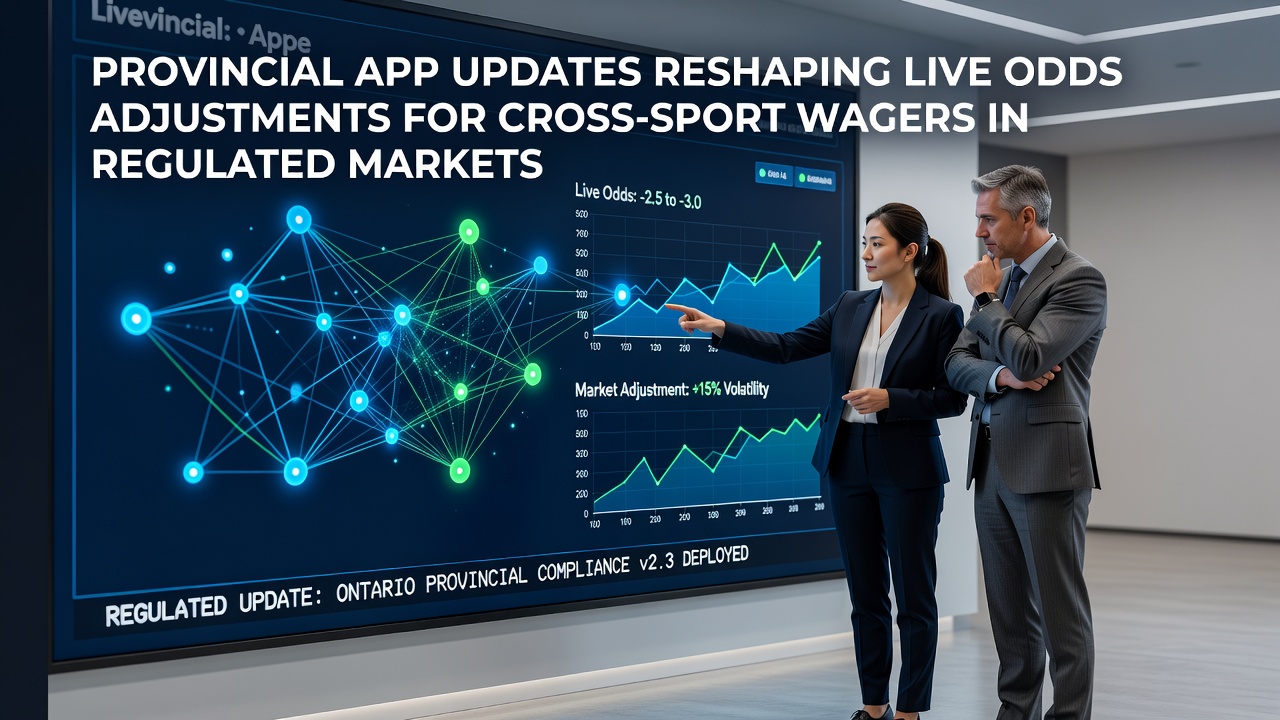
Provincial App Updates Reshaping Live Odds Adjustments for Cross-Sport Wagers in Regulated Markets
Provincial governments in Canada continue to refine their regulated iGaming platforms through targeted app updates that integrate advanced data pipelines, and these changes directly influence how live odds recalibrate during multi-sport betting sessions. Operators in Ontario and British Columbia have rolled out backend enhancements since early 2025 that connect player activity across hockey, basketball, and soccer markets, allowing systems to adjust odds in response to simultaneous events rather than isolated matches.
Real-Time Data Integration in Updated Apps
App developers working with provincial regulators now embed streaming APIs that pull from multiple sports feeds at once, which means an in-play parlay spanning an NHL overtime period and an NBA quarter can see its implied probability shift based on correlated risk factors. Data from the Alcohol and Gaming Commission of Ontario shows that these integrations reduced latency in odds refreshes by measurable margins during peak evening windows, while similar frameworks in other provinces emphasize compliance with single-event settlement rules.
Those who monitor market behavior note that cross-sport wagers benefit particularly because the systems flag overlapping variables such as player injuries or weather impacts that affect more than one contest. The updates also enforce stricter audit trails so every odds adjustment carries a timestamp and source identifier, satisfying requirements set by provincial gaming authorities.
Adjustments to Live Odds for Multi-Sport Combinations
Live odds engines inside the refreshed apps apply machine-learning models trained on historical cross-sport datasets, enabling them to recalculate probabilities when one leg of a wager concludes and another remains active. In August 2026, several provinces plan to activate enhanced correlation matrices that automatically discount or inflate odds when statistical links between sports exceed predefined thresholds.

Operators report that these models draw from aggregated anonymized transaction logs rather than individual accounts, maintaining player privacy while improving accuracy. Research published by the Canadian Centre for Gaming Research indicates that such techniques have lowered the frequency of manual interventions by trading desks during high-volume periods.
Regulatory Oversight and Market Stability
Provincial frameworks require that any odds adjustment algorithm undergo third-party testing before deployment, and the new app versions include modules that log every parameter change for post-event review. This approach aligns with broader North American standards while allowing each jurisdiction to tailor rules around its own risk tolerance. Observers note that the combination of automated checks and human oversight creates a layered verification process that catches anomalies before they reach bettors.
Cross-sport wagers present unique challenges because the outcome of one event can influence betting patterns on another, yet the updated systems isolate these influences through modular pricing layers. Regulators in multiple provinces have issued guidance documents that outline acceptable correlation handling, ensuring operators do not inadvertently create advantages or disadvantages for particular wager types.
Future Developments and Implementation Timelines
By the second half of 2026, further app releases are expected to incorporate geofencing refinements that confirm user location before any live odds display, reinforcing market integrity across provincial borders. Industry reports from the North American Association of State and Provincial Lotteries highlight ongoing collaboration between technology providers and regulators to standardize data formats, which should streamline future cross-sport product launches.
These incremental updates demonstrate how regulated markets adapt their technical infrastructure to accommodate evolving bettor preferences without compromising oversight mechanisms. The result is a more responsive environment where live odds for cross-sport wagers reflect real-world developments with greater precision and documented accountability.
Conclusion
Provincial app updates continue to reshape the mechanics of live odds adjustments, particularly for cross-sport wagers that rely on synchronized data streams and automated risk calculations. Through documented regulatory processes and measurable technical improvements, these platforms maintain compliance while supporting the operational demands of multi-event betting in controlled markets.